
Refining a rough start
How much is too much?

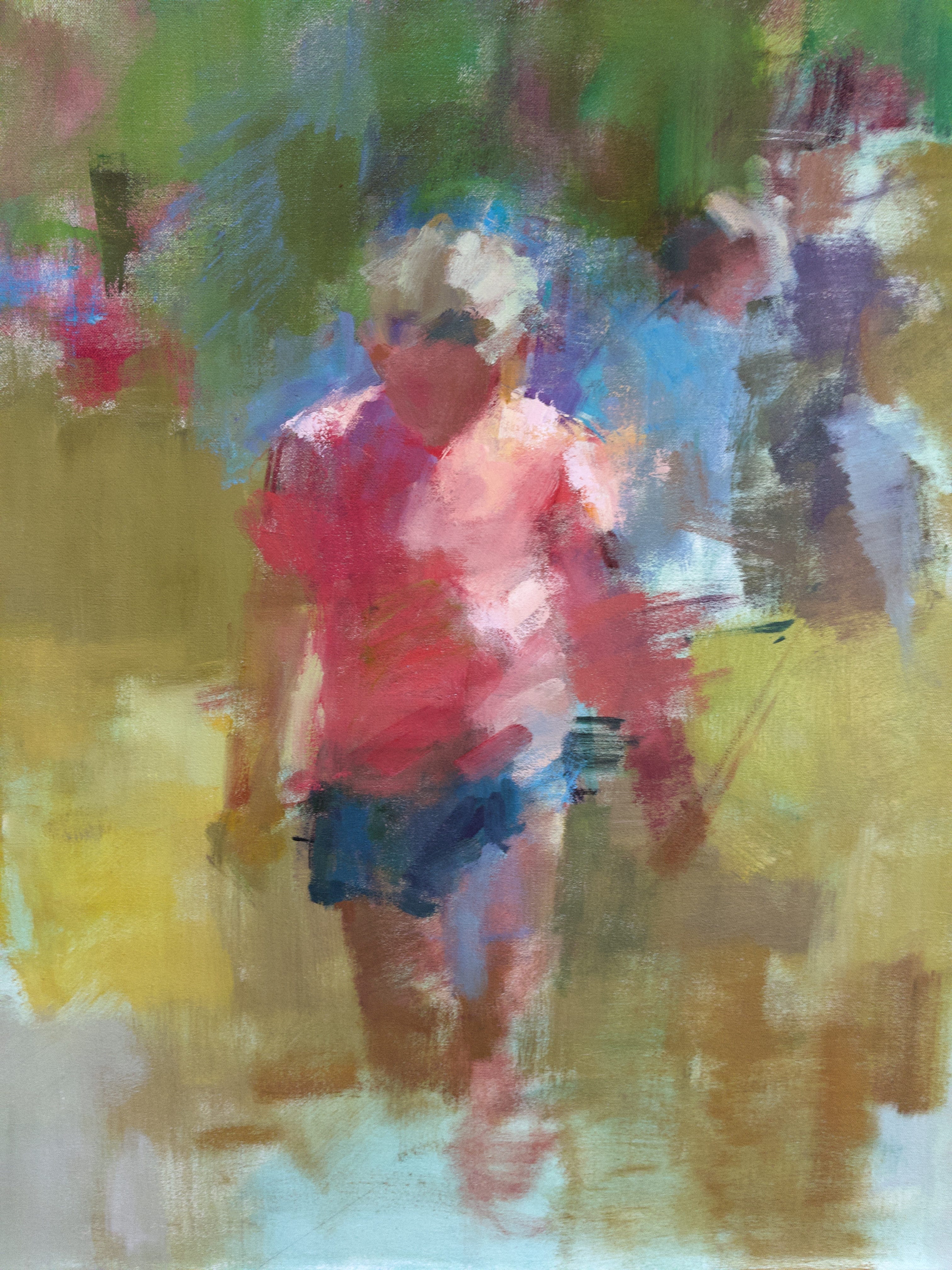
Recently, I posted this detail on social media because that’s how the world works nowadays. It’s almost unfathomable that previous generations of painters simply presented their work to the public only when it was done via galleries or exhibitions. In between, there was no expectation that they wave their unfinished canvases about, seeking attention.
But I digress.
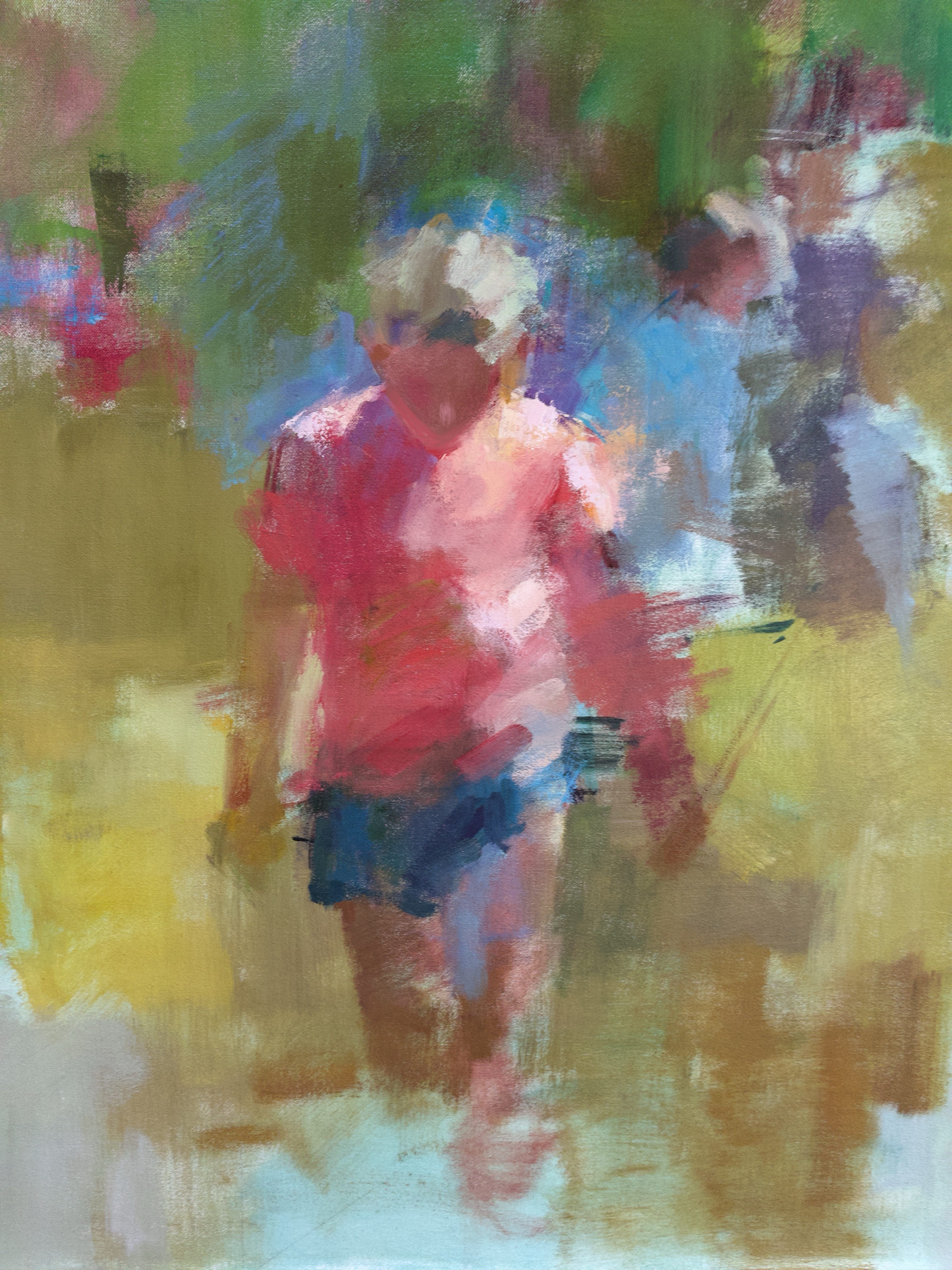
The figure is 6” of a 30 x 40” canvas and nothing is finished though I like the direction it’s heading in. It has light, colour, atmosphere and ambiguity - all things that delight me.
A friend commented that it would be nice to see a colour change between the face and its cast shadow on the pink shirt and that got me thinking about levels of finish. Could this figure simply stay as she is and be called done? What would be gained by refining for greater clarity and what would be lost? Do I want to give viewers more information or do I want them to live with some uncertainty?
There are no right answers.
Level of finish is entirely personal and every painter has a level that seems just right to them. When we pay close attention as we work, we know when we’ve achieved that moment of rightness. We look at the painting and recognize that it conveys everything that we want it to. It’s finished.
And then we add “just one more mark” which invariably leads to more marks to balance that addition and the moment is lost. We make the painting into something new and more complex and, perhaps, even more interesting, but that lost moment still haunts us. Every painter has said at some time and with regret: “it was better before”.
I prefer sketchy, unrefined work and always have.
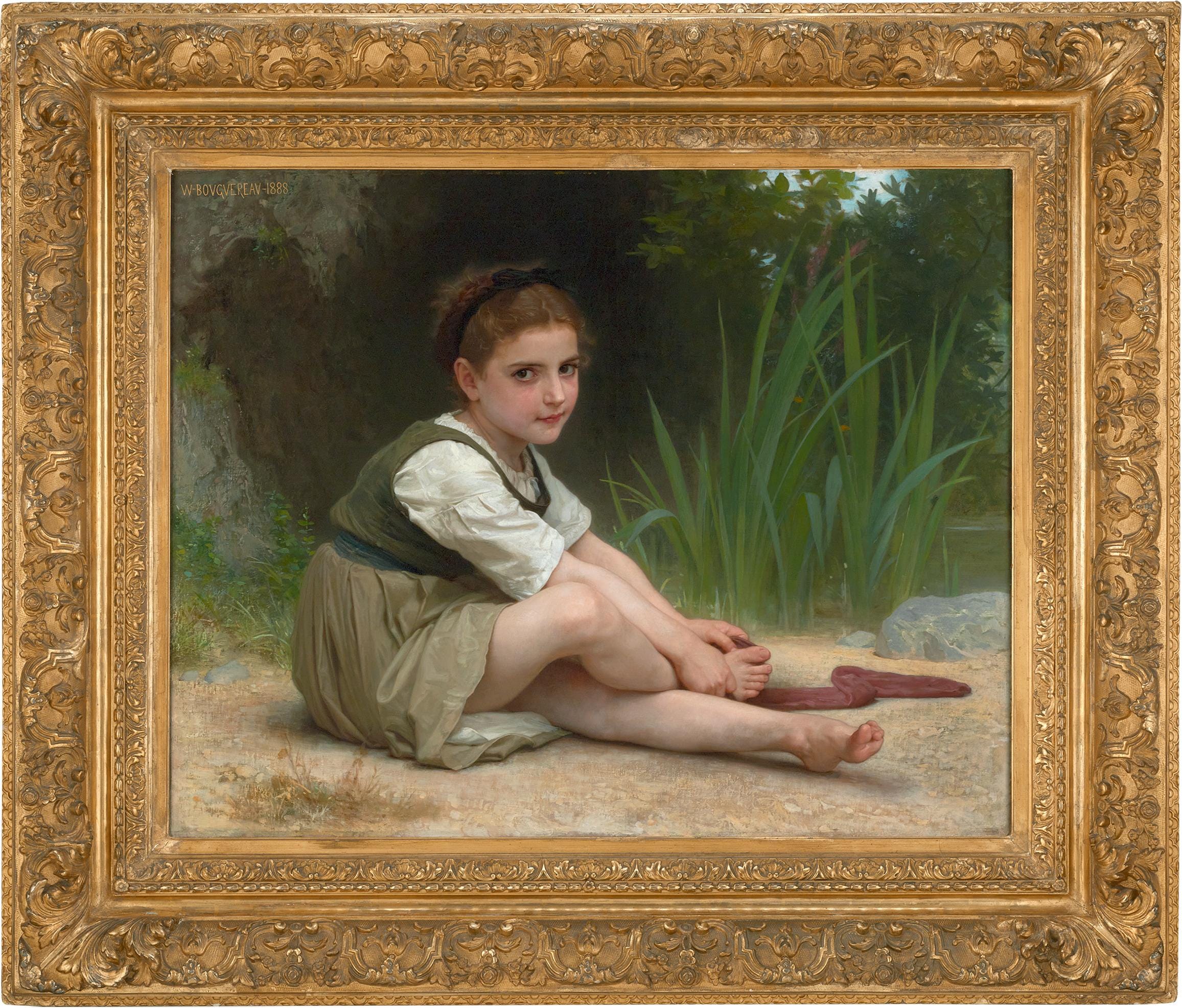
Bouguereau leaves me cold
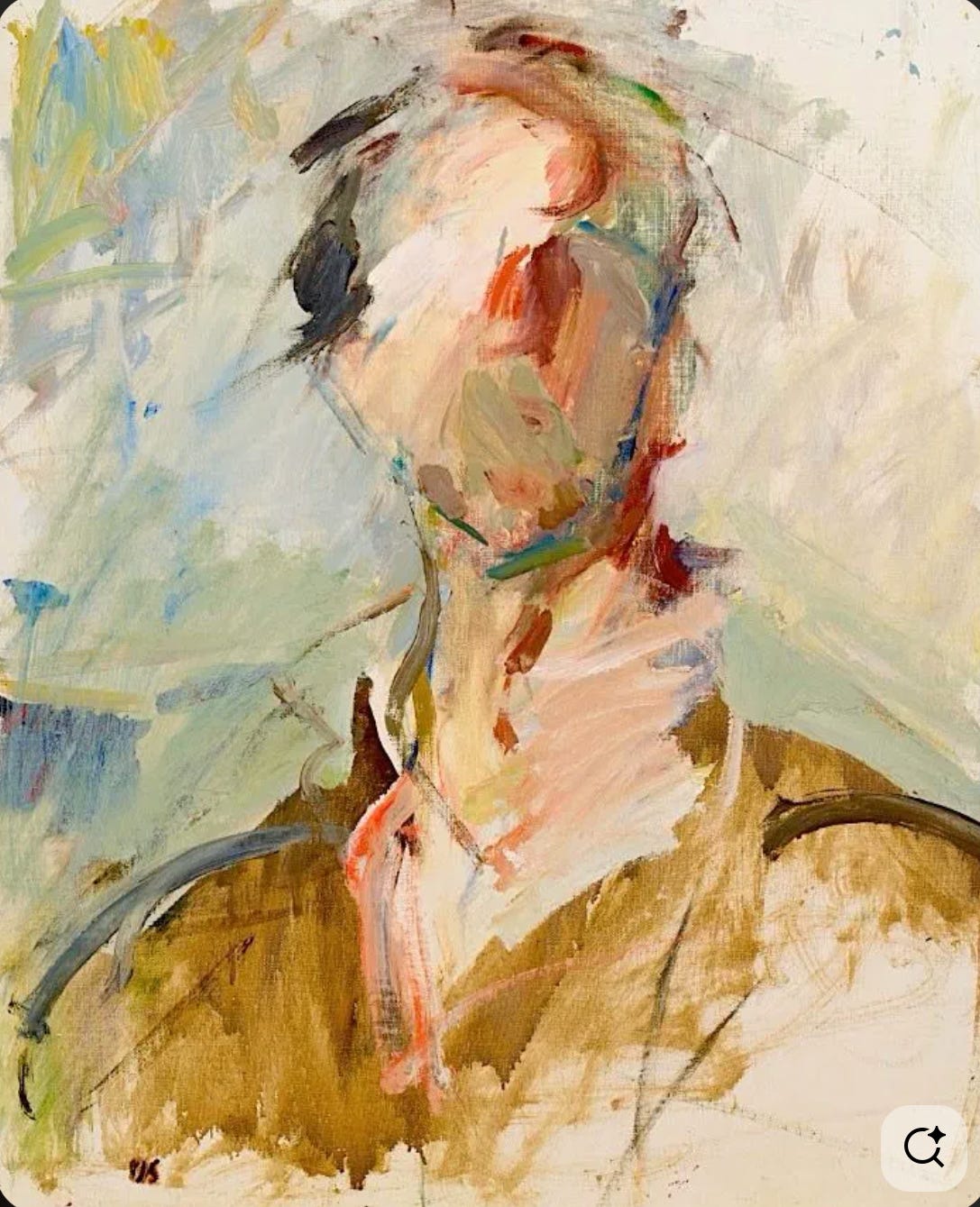
while Olle Skagerfors thrills me.
I believe that Helene Schjerfbeck’s pears say all that needs to be said about colour, form and shape relationships
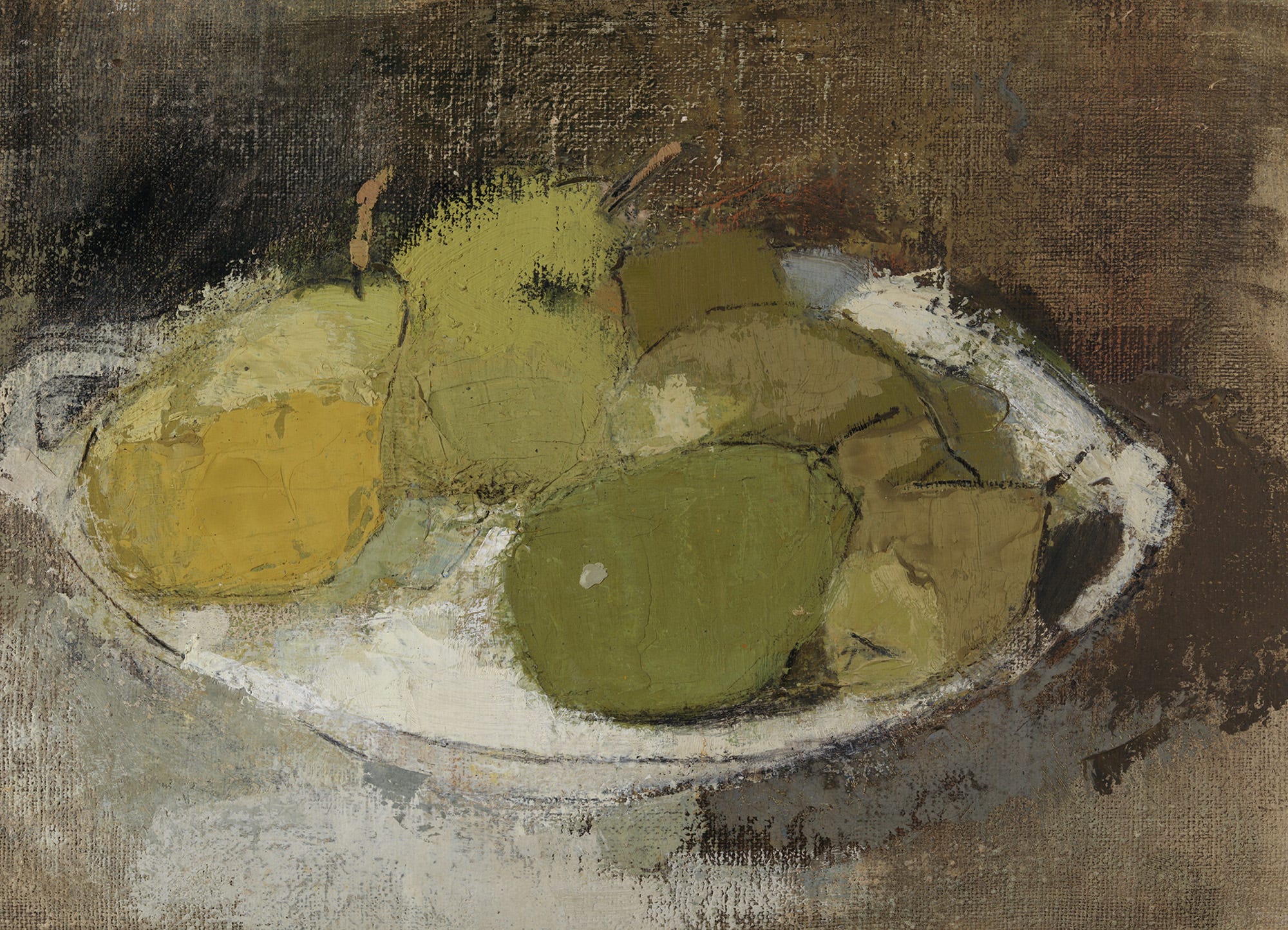
and added detail would only ruin their pure, simple effect.
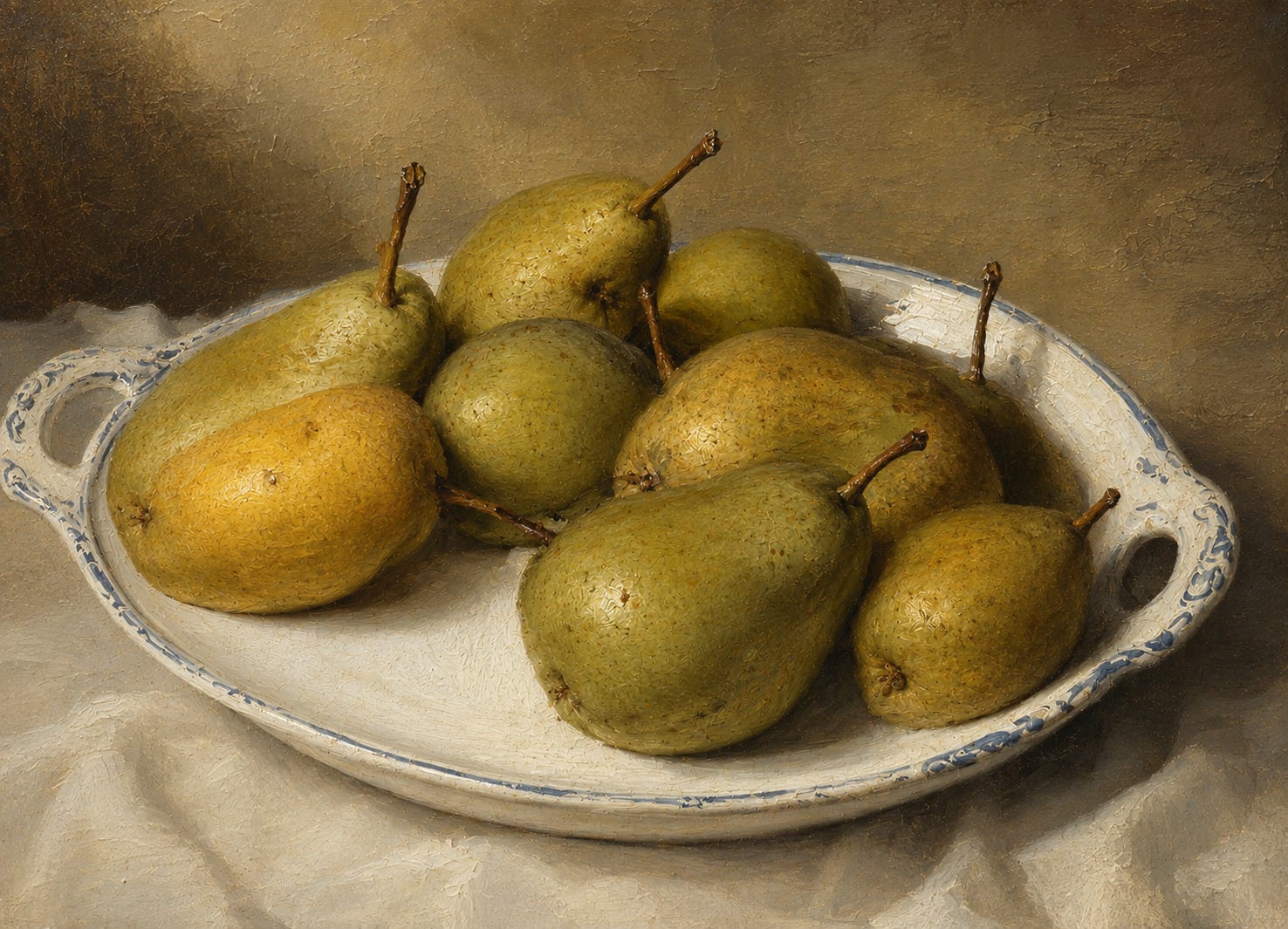
I’m too literal minded to be an abstract painter, but Schjerfbeck and Skagerfors’s works strikes a balance between representation and abstraction that appeals to me. Their work feels honest; they’re impressions not dissections and my literal brain loves realizing that it can make perfect sense of these paintings despite their incompleteness.
So, keeping my preferences in mind, I put this little figure into Procreate and explored level of finish. I refined slowly as I would on the canvas.
Starting small, I added a nose and some reflected light in her jaw. Instantly, our eyes are drawn to her face. I gain clarity about jaw and shirt but I also stop thinking of this as an image about light and colour. Now, it’s becoming a painting about a specific person and a narrative element emerges. Who is she? What’s she thinking as she gazes into the water (it will become water eventually) around her legs?
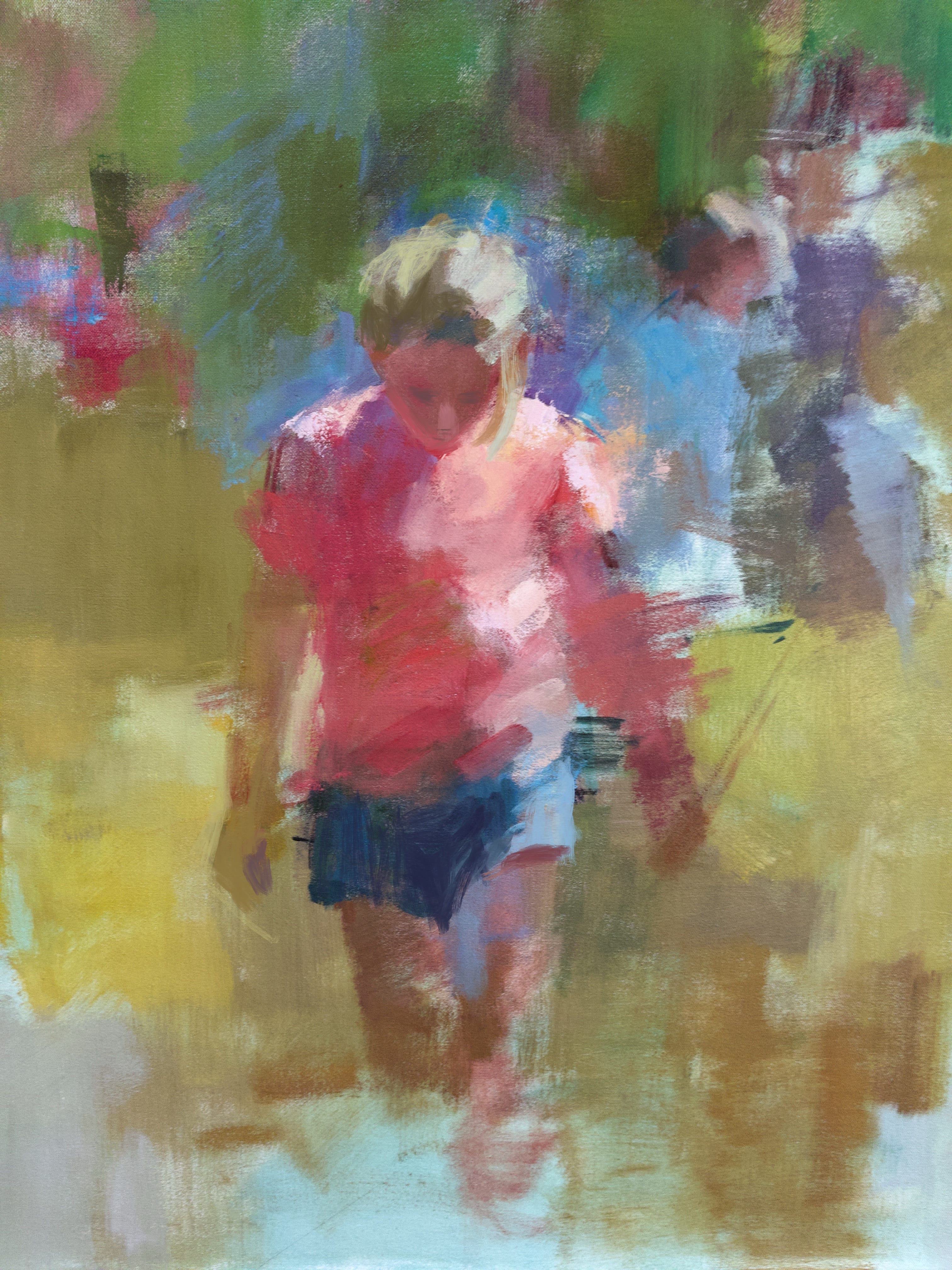
Adding eyes and refining the hair further intensify the head and require me to balance it with a bit of detail in the hand shape on the left and a shadow from her shorts on the right thigh.
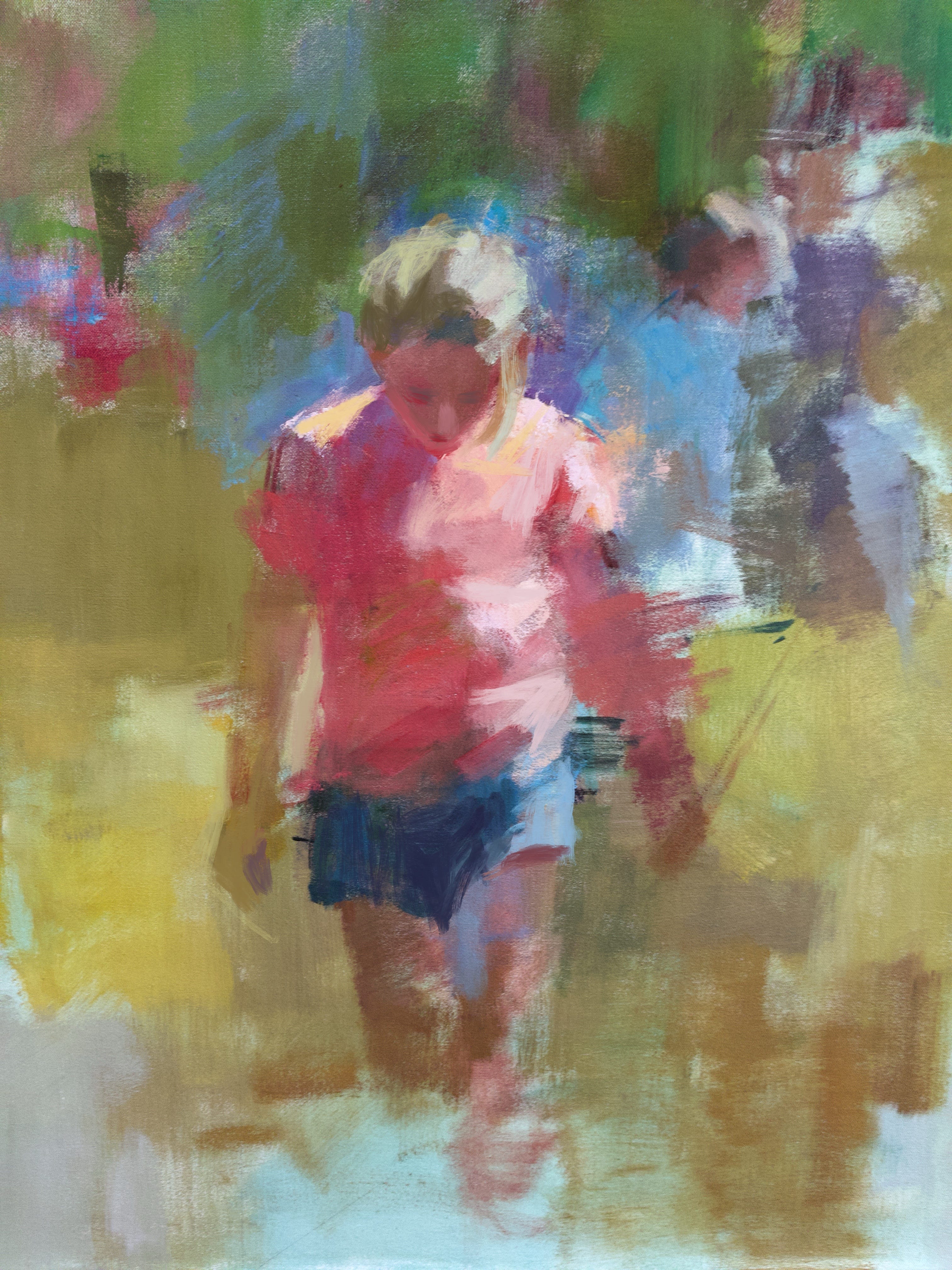
Oy vey! A mouth!
Is anyone even looking at the shirt in shadow anymore or has it become incidental to the depiction of a particular face?
In this version, I’ve made you notice the shirt again by pushing a piece of crisp yellow light onto the hip. This balances the face but I’ve had to sacrifice some delicate layers of colour to this brutal stroke.
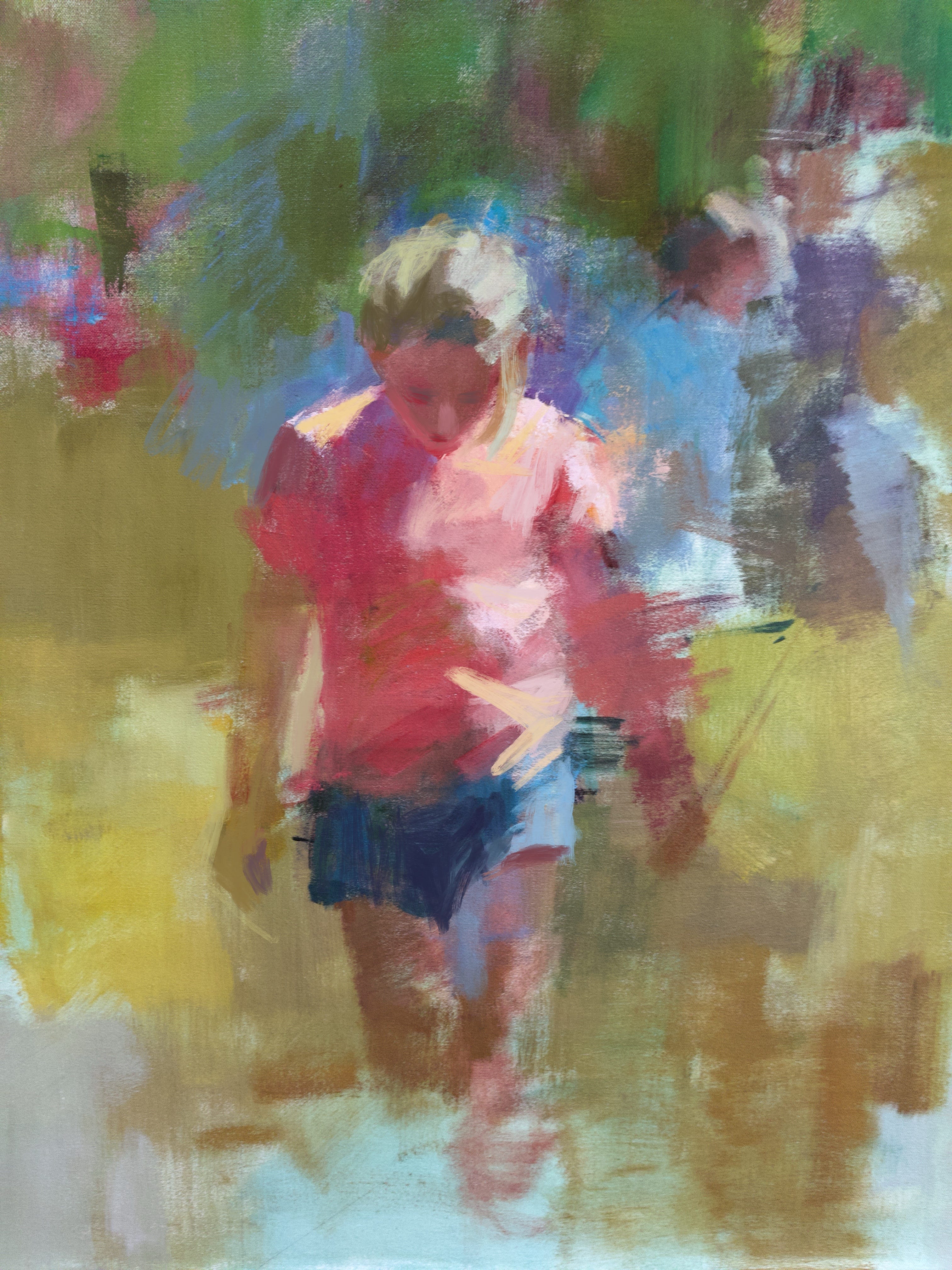
Following along with the logic of the piece, I needed to refine the hands and thigh and show that the shape in the background is actually a person
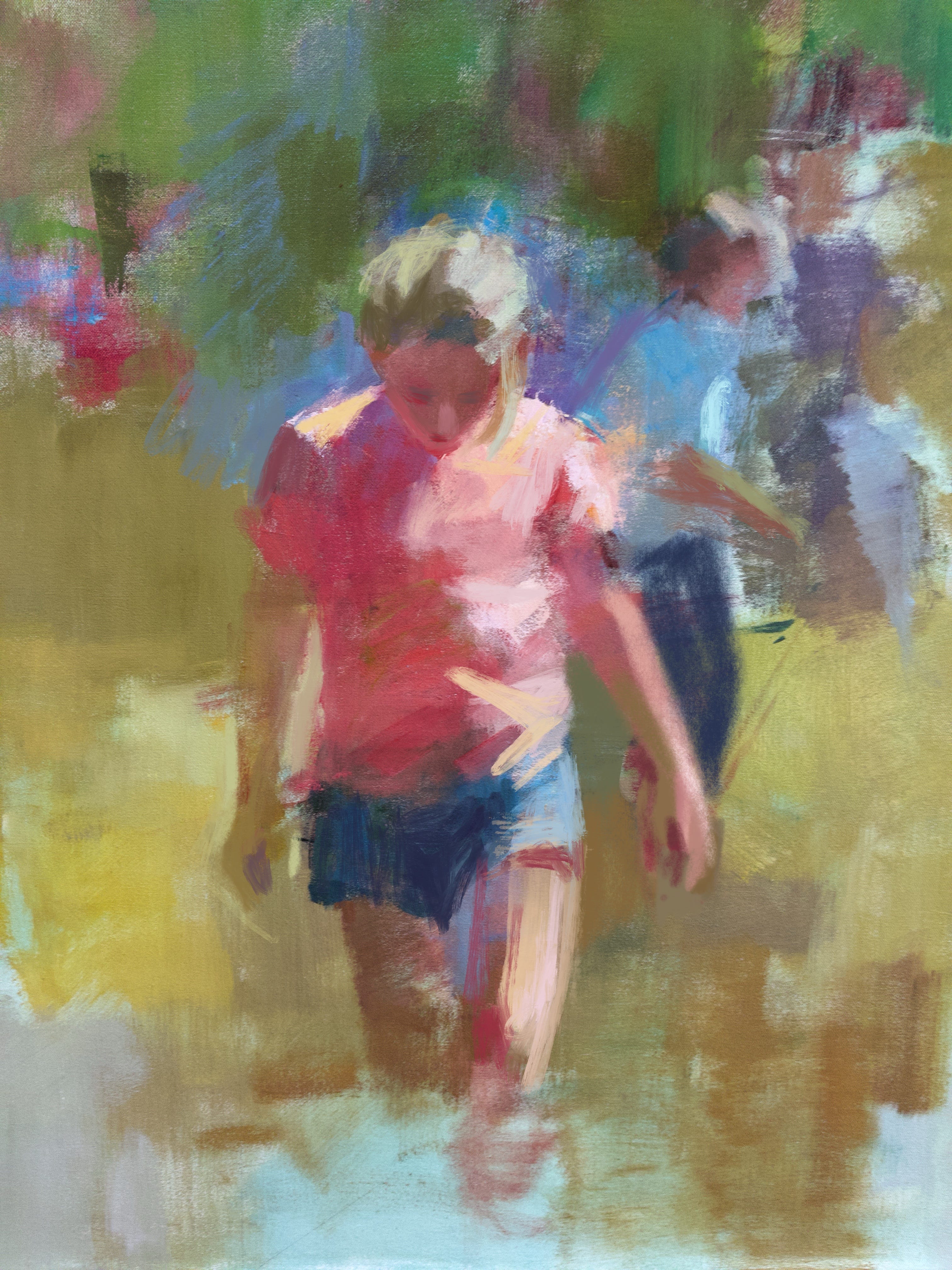
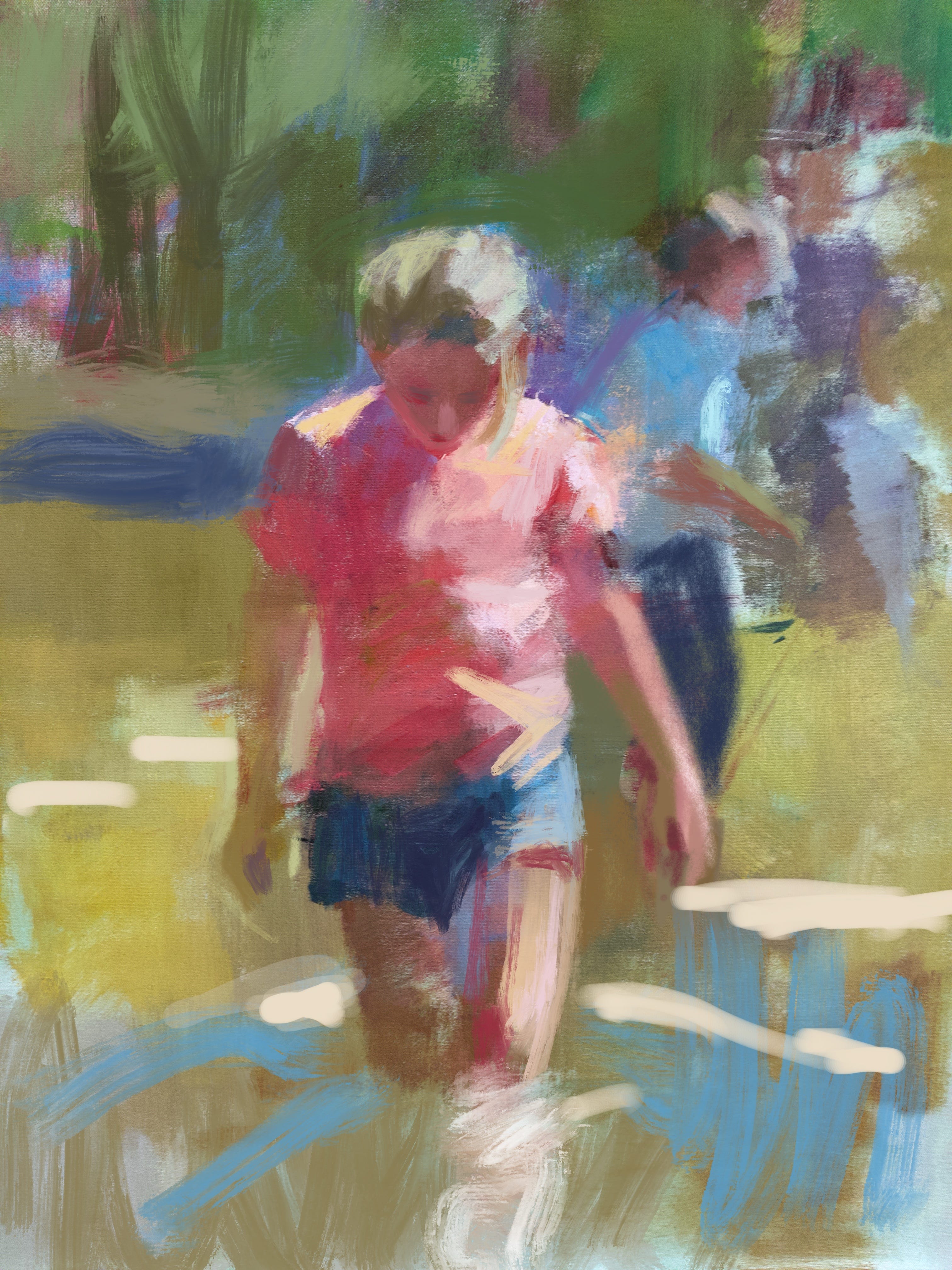
And in this final picture, I gave a more specific context: the girl is wading in a forest creek.
None of those moves are wrong but neither are they necessary. I could stop with the original or continue to even greater clarity as in this one where I asked AI to refine it à la Bouguereau but with my colours.
Egads! It’s a slippery slope.
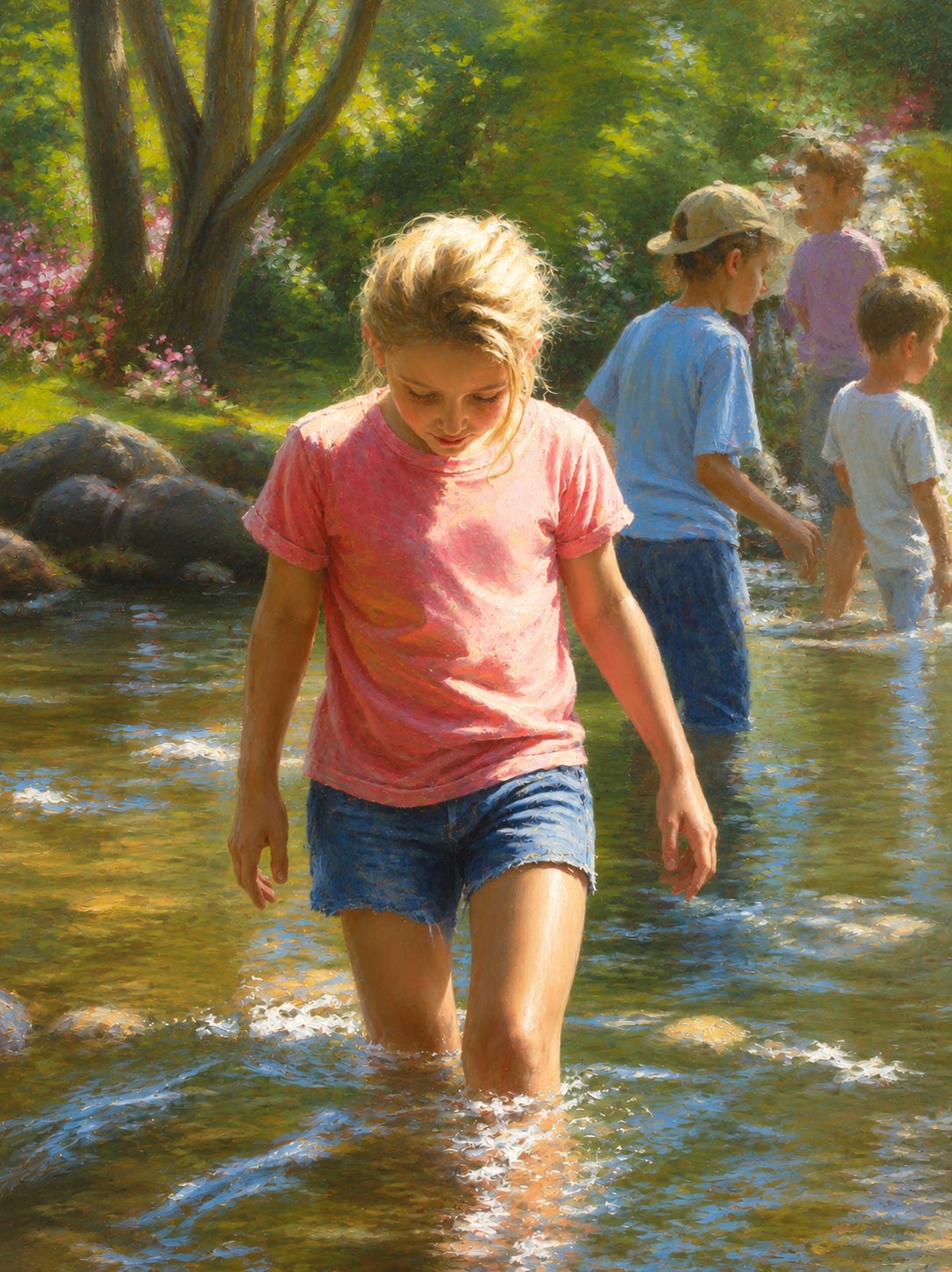
Which is all to illustrate that one mark - a nose - easily leads to many more. But it doesn’t have to. If I’m clear about my original concept, I can avoid the trap of over refining.
In this painting, I’m trying to convey summertime, sun, dappled light and ease. I want to paint a dream or a memory, not a portrait. Since the painting is just at its beginning, I know that there will be many days ahead in which I’ll have to work hard to hold onto that pure, initial idea.
For inspiration, I’ll look at painters who captured that dreamy essence and didn’t get caught by “one more mark”.
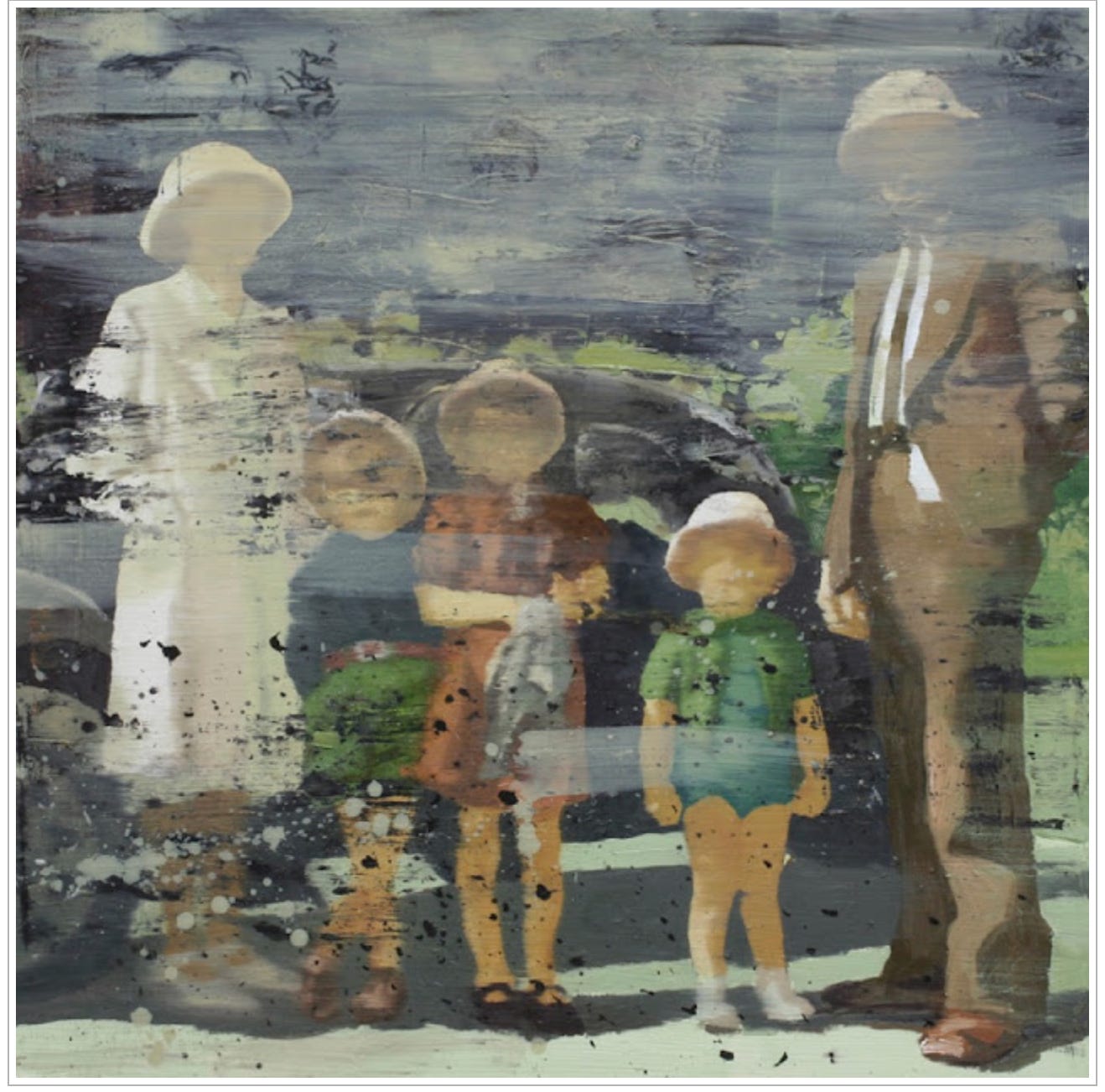
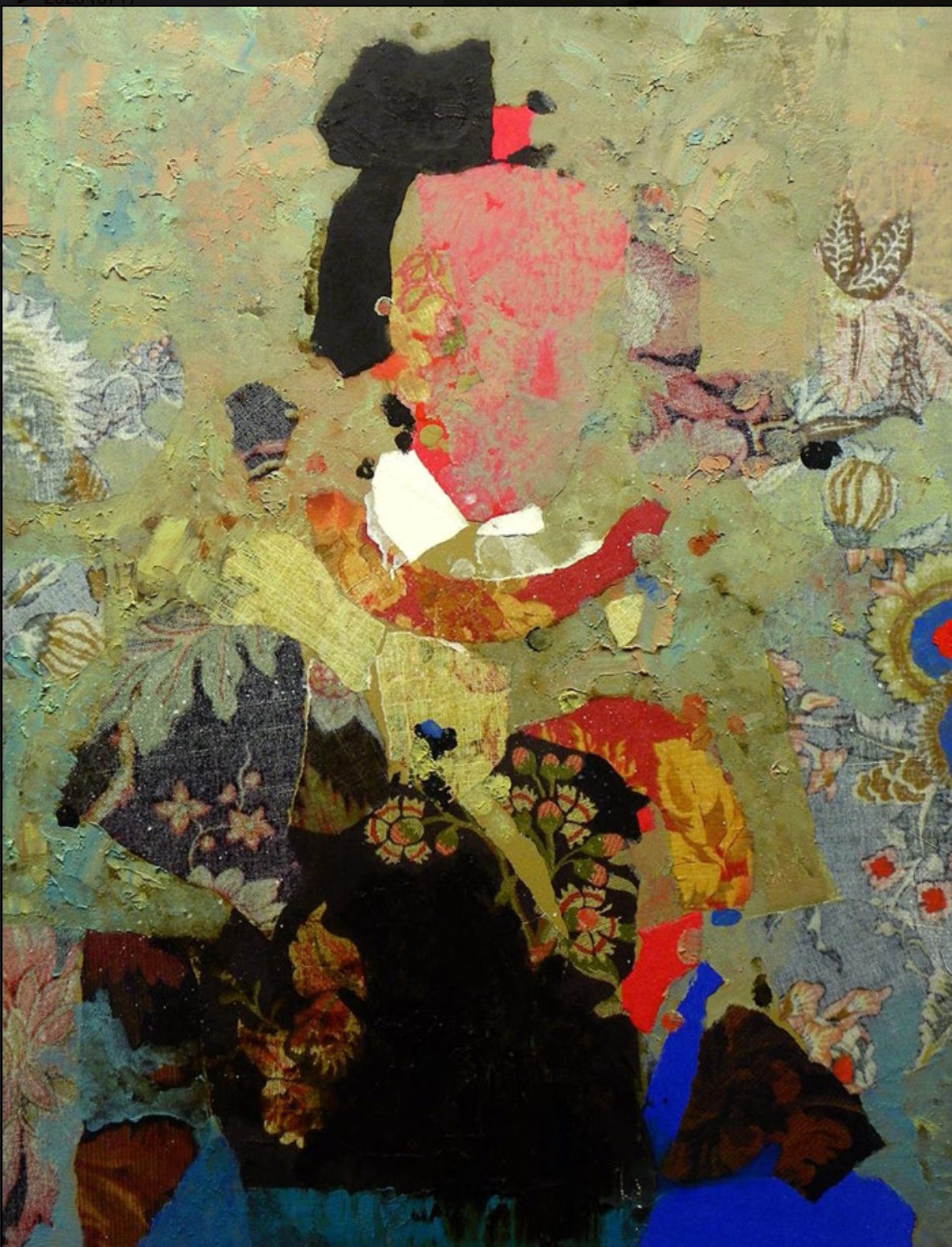
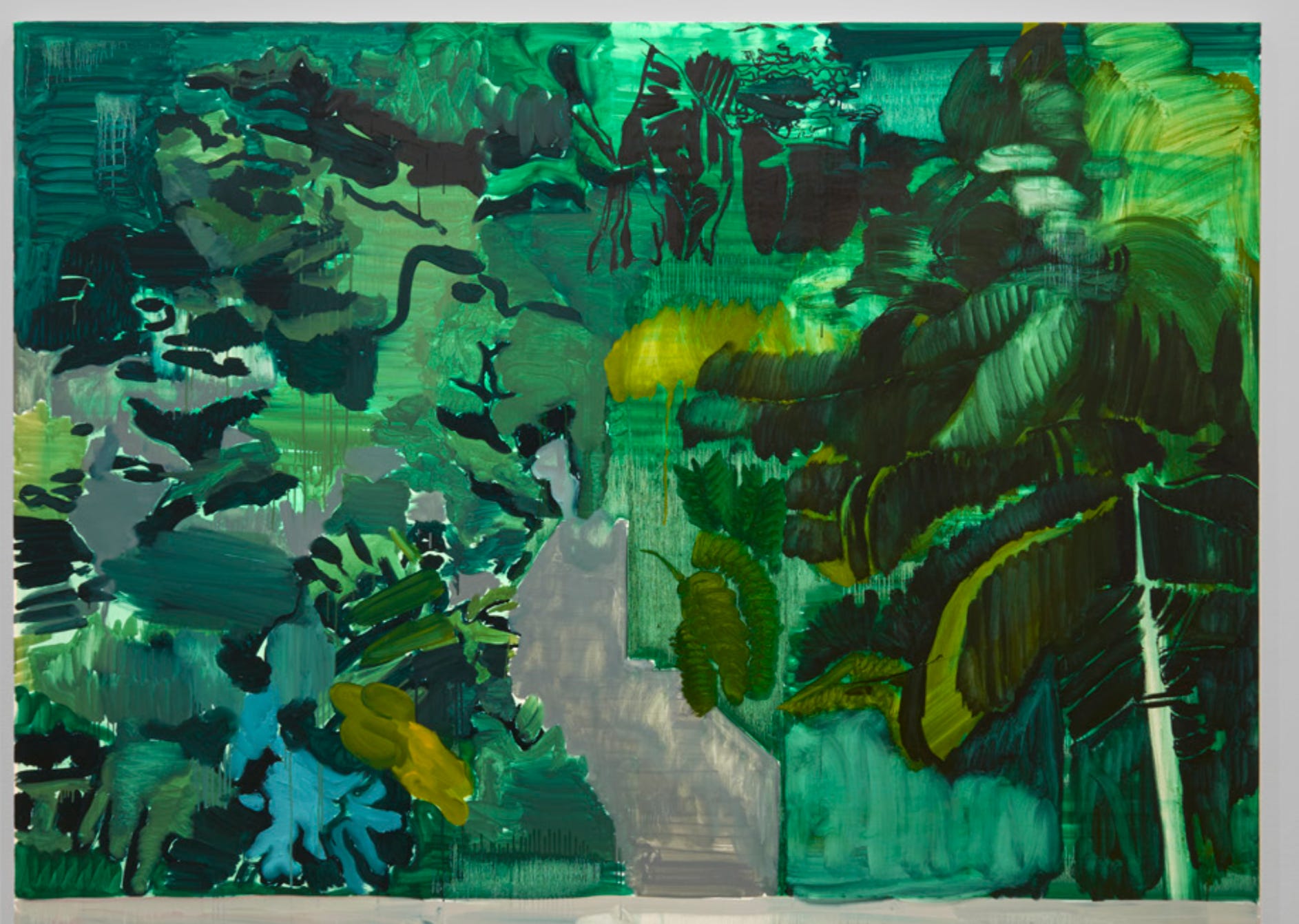
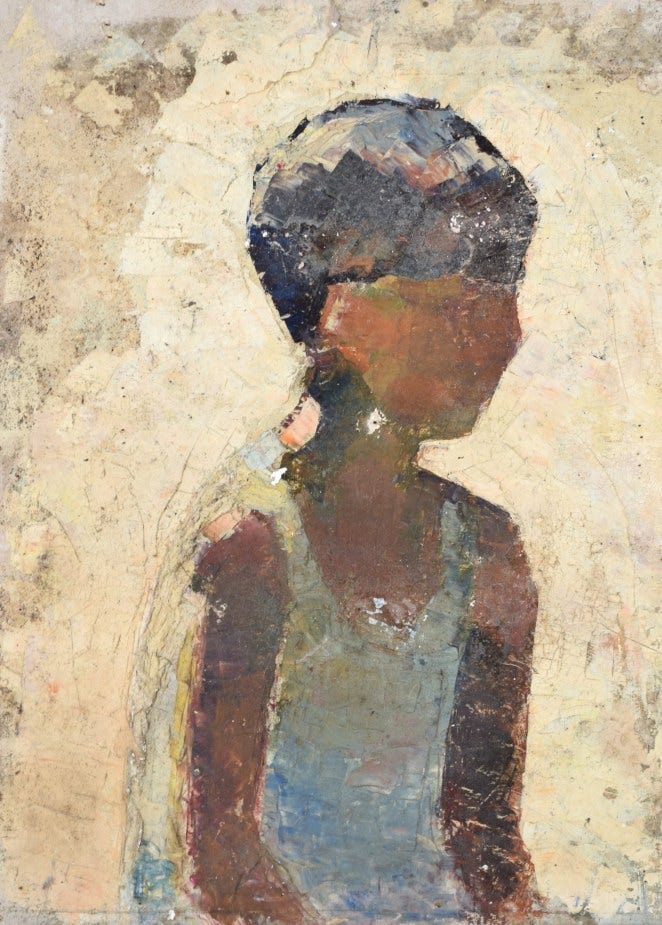
Wish me luck and happy painting!
My newsletter is a labour of love (and sometimes just a labour:) If you’d like to support my writing, I’d be honoured if you’d buy me a coffee.
Thanks for posting this Ingrid, it's really a fascinating conversation - when are we 'done' as artists, when is a work 'complete'. I'm with you in that realism leaves me a bit cold (take a photograph). For me, it's the way our brain completes an impression that creates that work in OUR minds (which might be different to the artist's). And that is why art is a continual fascination for me I guess!
Great post! I learn so much when you show examples from other artists, thanks! My brain always tends towards wanting to put in the details, but artwork speaks to my heart much more when the details are omitted and only "the one thing" is communicated (which for me is usually light and shadow). The struggle is real! :)