
Podcast interview
Painting Insights Podcast

I have an inexhaustible interest in painting and have spent years tempering my enthusiasm in conversations, aware that I could become like the photographer who happily chatters about f stop and bokeh or the gardener who delights in discussing compost. Fascinating topics, but definitely niche and capable of clearing a room. Bizarre as it may seem, not everyone wants to hear about my struggle to find the perfect blue or how my interest in highlights has changed over the years.
So it was a rare and delicious experience to talk about those things and more with Simon Renshaw of the Painting Insights Podcast. Like me, he’s someone for whom pigments and process are endlessly fascinating and going into detail about them is our idea of a perfect conversation. (Simon makes his own paint from minerals that he grinds himself. He’s my kind of guy.)
I’ve enjoyed the Painting Insights podcast for quite a while now because it focuses on in-depth explorations of the stuff that matters so much to painters but isn’t discussed much in art books: pigments and process. Though I have many image-rich books about my favourite artists, they tend to be filled with critical essays discussing how political events, socioeconomics, or the artists’ health and family situations affected their lives and careers; not how they made their paintings. Academic essays like this do nothing for me.
I don’t want to know about, say, Van Gogh’s personal life; I want to know about how he made his extraordinary colour decisions. Discovering the fact that he used coloured strands of wool to test individual colours’ effects next to each other was meaningful for me in a way that none of the stories about his tragic, poverty-ridden life were because, unlike Van Gogh’s personal life, this bit of practical information is something that can guide me as a painter and an art appreciator.
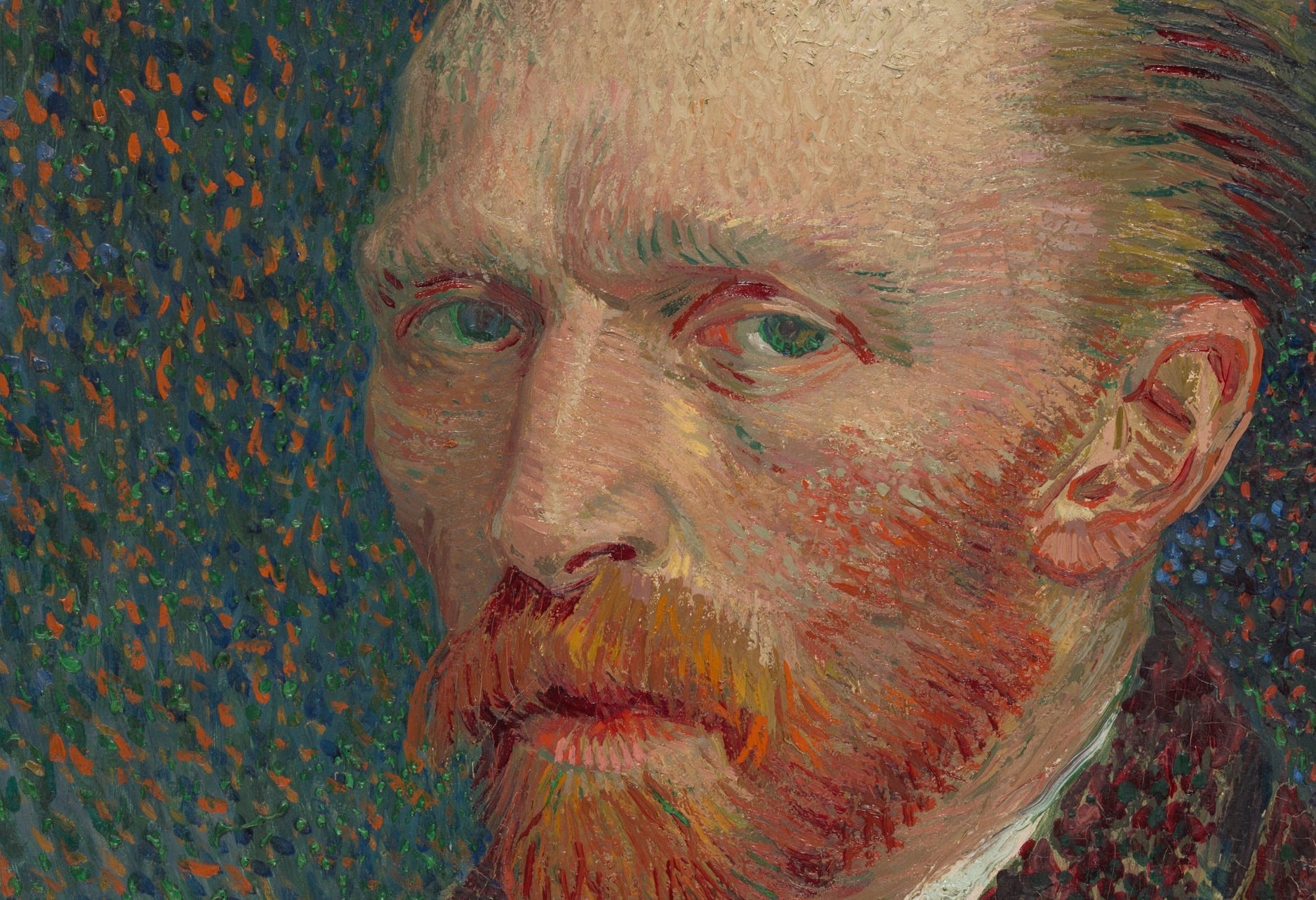
Since I learned about the wool, I’ve seen Van Gogh’s work in a new light. Now, when I look at his linear, side-by-side marks of contrasting colour, I picture an artist methodically testing colour ideas like a scientist: What happens when I lay this orange beside that cool green? Do my senses thrill to it or does it fall flat and unremarkable? No longer a one-dimensional, tragic figure, I see him as intelligent, creative and resourceful, driven by a desire to make innovative colour interactions on canvas. Van Gogh’s wool gave me an insight into how a working artist approached a common artistic problem.
Artists usually work alone and because of this, art making is hard to observe. In fact, we seldom make anything truly inspired when we’re under observation; the magic just doesn’t happen. That’s why I rely on interviews like the ones I’ve listened to, and participated in, to teach me new tools, colours, and methods. I learn something from every artist interview and sometimes it helps me solve problems in my own work.
Things I’ve learned from the previous Painting Insights interviews that have stuck with me:
Maggie Siner first paints the outline of the rectangle on her unstretched canvas so that she can compose her painting relative to the outlined, four edges of the picture plane. I’ve done this since listening to her and it’s a massive help in composing. Unbelievably so. Try it!
Peter Van Dyck paints his scenes in curved, fish eye effect because that’s actually how our eyes work. Our eyes are spheres and the world conforms to that sphericality when we view it. Our brains are just so good at compensating that they convice us that walls are vertical, not the bowed lines that they actually are. I’ve been aware of the curvature in my periphery ever since.
Joe Gyurcsak’s favourite outdoor palette is white, lemon yellow, raw sienna, alizarin crimson, and cobalt blue. He swears by the beautiful, high key results and I’m looking forward to trying it.
There’s more but you get the idea. Each painter reveals something of their intentions, interests and practise and, occasionally, it’s just the thing that I need to hear.
It’s my hope that there’s something in my interview with Simon that is just the thing that you need to hear.
The audio version of this podcast is available on Spotify and Apple Podcasts.
Happy painting!
*I love writing this newsletter to organize and process my ideas about painting. It will always be free but if you’d like to donate to my writing, I’d be honoured if you’d buy me a coffee:)
Listened to this yesterday. Fabulous podcast! Well done.