
Deep work
Making meaningful paintings

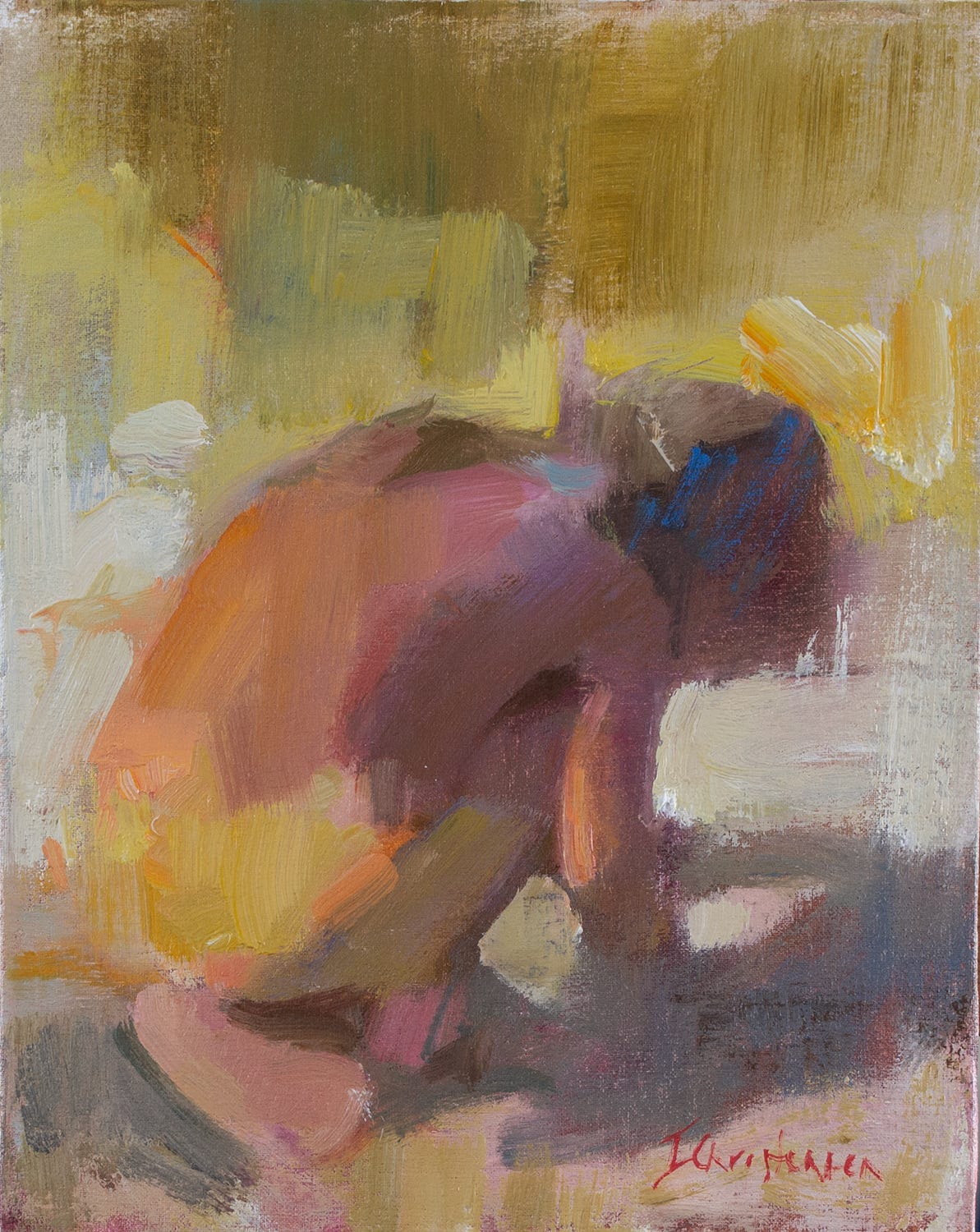
I critique a lot of artwork both in my online workshops and in person. One of the most enjoyable critiquing experiences for me is when I get asked by local art groups to critique their members’ works, en masse, during their evening meeting. Then, it’s just me, 2 easels and a community hall full of artists and their many paintings.
I spend the evening pivoting between the easels as helpers cycle the paintings across them. In an hour and a half, I may talk about 25 or more paintings in all genres and mediums, trying to say something encouraging and constructive about each one. It’s a high-wire experience for me to size up the composition, colour and execution of each piece in a moment, find the things that I think are working well, and then note a change or two that would make the piece even stronger.
By the end of the evening, I’ll have discussed oil, acrylic, watercolour, ink and collage artworks in abstraction, figurative, landscape, cityscape, animal portraits, still life and every other genre imaginable. My eyes are spinning and we’ve all had some lightbulb moments and some good laughs.
What I enjoy most is asking each artist about their work to discover what they hoped to achieve and what motivated the piece in the first place. Paintings are a form of communication between the artist and the viewer and every decisions the artist makes - from subject to composition, colour and brushwork - has an impact on how we perceive their work.
In my paintings, I’m always trying to convey the beauty of light on colour and form but the children-at-play images also communicate the nostalgia I feel for experiences from my own childhood. Annual family vacations to sunny places by the sea are wonderful memories for me, My parents were uncharacteristically relaxed, we ate restaurant food, watched novel TV shows when our sunburns kept us indoors (so many channels!), and bought shell necklaces and bright clothing that were too exotic to wear back home. Every beach painting that I make is an effort to express the sunshine and ease of those vacations.
So when I talk to the artists about their work, I’m trying to get a sense of the experiences and ideas that they’re trying to transmit; what concepts they’re exploring. For example: a painting of a deteriorating barn in a field could be the vehicle for saying something about desolation and decay or, if the artist has made features of the green landscape visible through empty windows and an open doorway, the image could be conveying the impermanence of human achievements and the return of nature. A shaft of sunlight illuminating rough walls could show us the surprising beauty to be found in unpromising places or the painting could be a formal exploration of man-made shapes contrasting with natural forms. There are endless possible interpretations for a simple image and I want to hear from the artist which ones they were contemplating as they worked.
Experienced artists will be able to say something about their initial concept while inexperienced ones will often just say that they liked the photo reference and so they painted it. Undaunted, I press them to be more specific. Did they love the way light contrasted with gloomy shadow? Did they feel a sense of peace or excitement in the scene? Did it bring up memories or experiences? The world is full of appealing photos and nobody is drawn to paint all of them so what was it about that specific image that called the artist to spend time painting it?
The more specifics I can draw out of them, the more likely they’ll be to ask the same questions of themselves the next time they start a painting. That will launch them down the path of making work that has meaning: deep work.
Deep work is, I think, an aim that artists should strive for but I’m also aware that viewers make their own meaning when they look at our art. A painting of a child digging at the beach which feels like an expression of contentment in my mind might feel like the depiction of innocence to another person and loss to someone else. And, as we get older, the same painting might change its communication with us, bringing up different thoughts and feelings now than it did when we were young. The subjective, shifting nature of images makes them tricky to critique but also gives them an expansive openness to interpretation that I love to explore.
When I ask artists to talk about their intentions, I’m asking them to recognize the potential power of what they make. They could simply be painting pretty pictures because they liked the photo reference, but it’s a far richer and more engaging act to paint a picture of your state of mind or your thoughts about some aspect of life that the photo made you think of. Holding those thoughts as we work, causes us to make very different painting decisions than when we’re thoughtlessly copying a photo. We paint to make those internal thoughts visible.
Perhaps I’m deluded, but I feel that we can sense when an artist had deeper motives than just depicting prettiness. Paintings copied from photos without intentionality can often feel like decor while paintings from artists who are aware of their power to communicate seem to have gravity and presence; they linger in our minds and bring up associations from our own experiences.
We can all make deep paintings. The first step is to ask ourselves why we want to paint the picture in the first place. Setting aside generalities like “because I like the picture” we can delve deeper. What, precisely, do we like? Is it the sense of airiness? Of movement? The fact that the photo sparks a memory of our mother’s hug? What does the image make us think and feel?
Once we have that, we’ll have a concept to organize your painting around. Our artistic decisions will be made based on whether they serve or hinder that concept. We’ll be able to meaningfully critique ourselves
Happy painting!
PS: I offer individual online critiques for artists who would like me to talk with them about their work. If you’d like to know more, you can find the details on my website.
** My newsletter will always be free but if you’d like to donate to my writing, I’d be honoured if you’d buy me a coffee:)
Lovely words with most inspiring thoughts! Thank you!
This is a good reminder to start asking